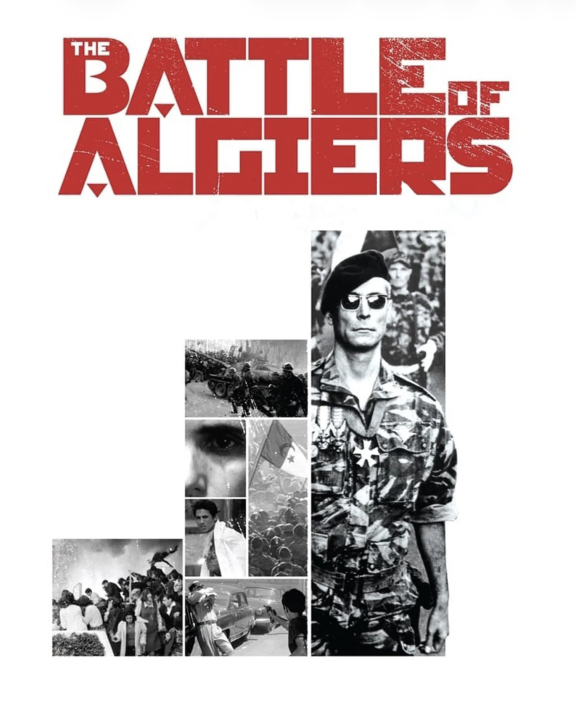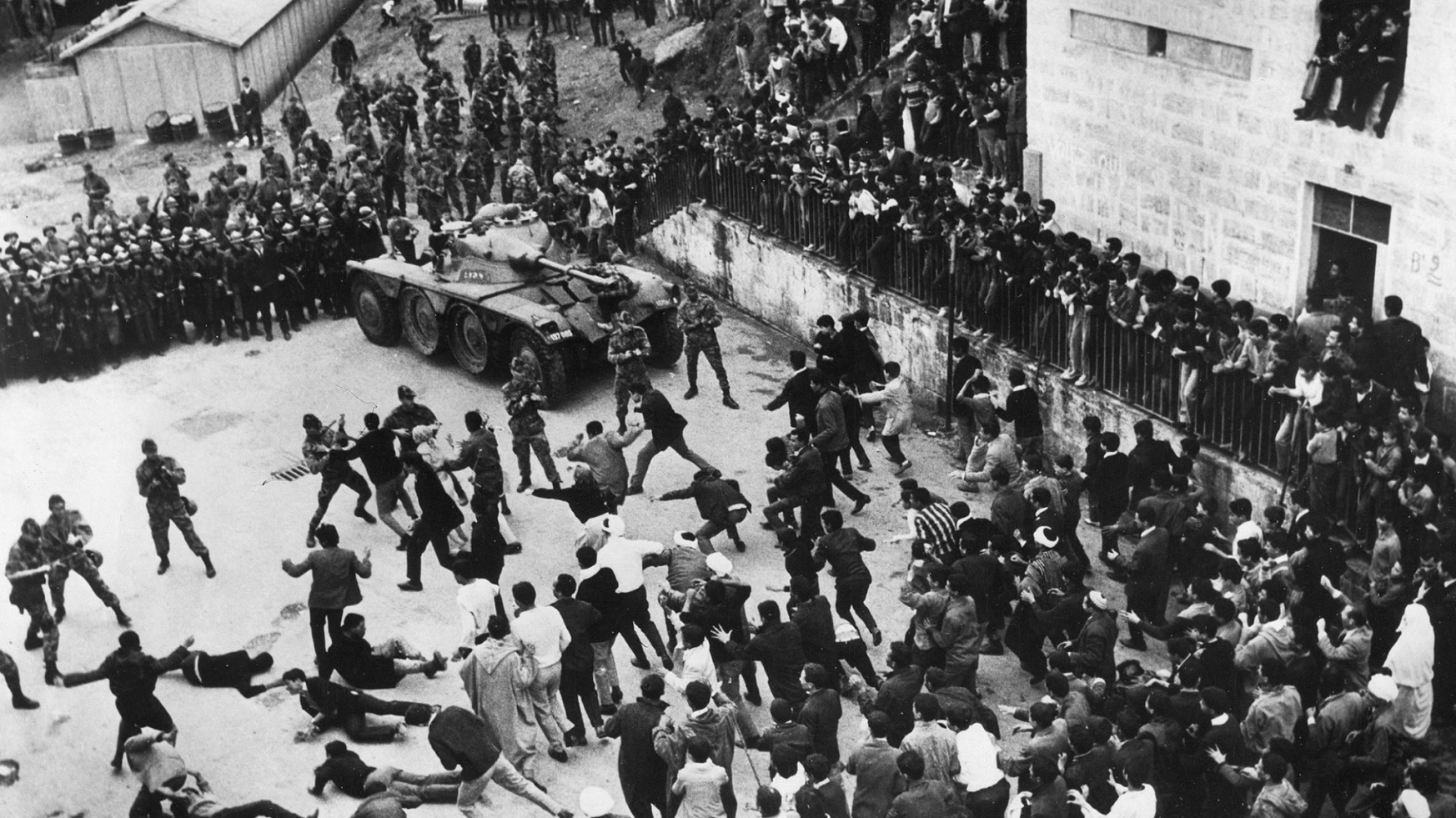
Filmcollege: Frames of War & The Battle of Algiers (1966)
Filmcritic and curator Hugo Emmerzael explores the intimate relationship between war and cinema. From the earliest camera technologies to today’s digital battlefields, this film lecture reveals how the history of cinema is deeply intertwined with the history of warfare.
Early film cameras were technologically related to weapons such as the Gatling gun and were soon deployed to record and frame military conflict. Documentary cinema documented early wars, while film later emerged as a powerful medium of protest and critical reflection, particularly in response to the Second World War and the Holocaust. In the decades that followed, the image of war shifted again, from the postmodern chaos of the Gulf Wars to the hyper-digital, fragmented imagery emerging from recent and ongoing conflicts such as in Syria, Ukraine and Palestine.
Exploring how cinema portrays and interprets conflict, the lecture invites critical reflection on images of violence and power. Hugo Emmerzael examines how cinema does not merely depict war, but actively shapes our understanding of it. How does the camera function as a weapon, a witness, and an instrument of power? How have technological developments altered our perception of violence and truth? And what does it mean to experience war today through an endless stream of images, screens, and real-time footage?
- 19:30
Kies tijdstip
- filmspecial
Filmcritic and curator Hugo Emmerzael explores the intimate relationship between war and cinema. From the earliest camera technologies to today’s digital battlefields, this film lecture reveals how the history of cinema is deeply intertwined with the history of warfare.
Early film cameras were technologically related to weapons such as the Gatling gun and were soon deployed to record and frame military conflict. Documentary cinema documented early wars, while film later emerged as a powerful medium of protest and critical reflection, particularly in response to the Second World War and the Holocaust. In the decades that followed, the image of war shifted again, from the postmodern chaos of the Gulf Wars to the hyper-digital, fragmented imagery emerging from recent and ongoing conflicts such as in Syria, Ukraine and Palestine.
Exploring how cinema portrays and interprets conflict, the lecture invites critical reflection on images of violence and power. Hugo Emmerzael examines how cinema does not merely depict war, but actively shapes our understanding of it. How does the camera function as a weapon, a witness, and an instrument of power? How have technological developments altered our perception of violence and truth? And what does it mean to experience war today through an endless stream of images, screens, and real-time footage?